The Congo Gives Your Flat White Its Soul. The World Gives Almost Nothing Back.
Apr 4, 2026
The body in your flat white. The chocolate depth in your cappuccino. The crema holding your espresso together. It all has an origin. And that origin is one of the most ignored, most extracted-from, most undervalued coffee stories on earth.
Most people who care about coffee know that Ethiopia is the birthplace of Arabica. It's on the menus. It's in the origin stories. It has earned its place in the conversation.
Far fewer people know that the Robusta in their flat white — the component that gives it body, chocolate depth, and the crema that makes the texture what it is — has an origin story just as old, just as profound, and almost completely absent from the menu.
That story focuses on two places, deeply connected to each other.
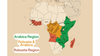
The first, Uganda, where wild coffee is described in ancient stories and is described as a fruit found natively around the shores of Lake Victoria. A fruit that was domesticated by the Baganda people centuries ago — cultivated in household gardens, used in the ceremonies of the Buganda Kingdom, woven into the culture of a people long before any European trader had heard of the plant. We wrote about what that heritage earns Uganda today in our $16 a Month article. The number is as uncomfortable as it sounds.
And the second, now known as The Democratic Republic of Congo, where the wild forests of the Congo Basin held the specific genetic material that a Belgian horticulturist collected in 1900, sent to Java (Indonesia), and turned into the global Robusta industry. The Rwenzori Mountains straddle both countries — the same ecosystem, the same deep roots, two nations sharing one origin story and both receiving a fraction of what that story is worth.
Uganda at least has a functioning coffee industry to argue about. The DRC's situation is something different entirely.
The Math Behind the Chocolate Notes
Robusta makes up roughly 40% of all coffee produced globally. It is in the espresso blend at almost every café you have ever walked into. It is what gives a flat white its weight, a cappuccino its chocolate register, a long black its staying power. It is the backbone of virtually every instant coffee ever manufactured. The global coffee market is worth over $127 billion. Robusta's share of that is not small.
In 1900 (long after coffee was already consumed in Africa), a Belgian took wild Robusta seeds from the Congolese forests to Brussels, then exported some of those seeds to Java island, this launched a species now known to the world as Robusta coffee to the world. The DRC received nothing for this, no royalty, no recognition, not even a mention on the blend cards in the cafés that profit daily from its genetic inheritance.
As we noted when we wrote about Cameroon's invisible role in building French café culture, the pattern of African origins powering global coffee identity while retaining almost none of the value is not an oversight. It is how the system was constructed. The DRC is where that construction began.
$29.9 million The DRC's total coffee export earnings in 2023. For the country whose forests provided the wild genetic material that launched a $50+ billion Robusta industry. For context: the DRC produced 120,000 tonnes of coffee in 1993. By 2016 that had fallen to 8,000 tonnes — a 93% collapse driven not by drought or disease, but by decades of conflict and the destruction of every piece of infrastructure that made production possible.
The Number That Matters More Than the Export Figure
When we write about value gaps in African coffee — in Uganda, in Cameroon, in Zimbabwe — we are usually talking about the distance between what a farmer earns and what the finished product sells for in Amsterdam or Zurich. That gap is real and damning across the continent.
In the DRC, the problem starts earlier. Before the coffee reaches any roastery. Before it crosses any official border. Before any export statistic captures it.
70% The estimated share of DRC coffee that is smuggled across borders into Uganda and Rwanda, where marketing channels still function, rather than moving through official domestic supply chains. The farmers are not criminals. They are navigating a system so broken — roads that barely exist, financing that is inaccessible, marketing channels that collapsed with the conflicts — that crossing a border illegally is simply more reliable than trying to sell at home. The value gap in Congo does not begin at the roastery. It begins on the back of a motorbike, in the dark, at a river crossing.
What makes it through official channels earns less than $30 million a year. From a country the specialty industry describes in terms reserved for the world's finest origins. The eastern Kivu highlands — high altitude, volcanic soil, the perfect growing conditions — produce Arabica that scores exceptionally in professional tastings. Floral, fruity, complex. The kind of coffee international buyers travel for.
The quality has never been the problem. Everything surrounding the quality has been.
Scientists Are Finding New Coffee Species Here. Right Now.
This is the part of the DRC story that stopped us when we were researching this article. And it is the part we think the coffee industry is not taking seriously enough.
In December 2024, WWF published a report documenting 742 new species of plants and wildlife discovered in the Congo Basin over the previous decade. Among them: entirely new species of coffee — plants that science had not previously described, growing in forests that are simultaneously being destabilised by conflict, displacement, and generations of underinvestment.
This is not a footnote. The global coffee industry is facing a genuine supply crisis. Climate change is already affecting Arabica yields in Brazil and Vietnam. Researchers and plant scientists are urgently searching for wild coffee relatives and new genetic diversity — climate-resilient traits, disease-resistant varieties, the biological tools that will determine whether coffee survives the coming decades as a viable global crop. In 2025, World Coffee Research launched a Robusta breeding programme explicitly built around the genetic diversity of the Congo Basin.
The forests where those answers may exist are the same forests where seven million people have been displaced by conflict. Where the roads don't exist. Where 70% of coffee leaves by motorbike across an unofficial border crossing.
We are discovering the genetic future of coffee in the same forests where we have allowed the present of coffee farming to collapse. That is not coincidence. It is the consequence of a century of extraction without investment — and it should disturb everyone in the specialty coffee industry who claims to care about where their coffee comes from and what happens to the places it comes from.
What Being at the Table Looks Like
The answer is not charity. It is not a certification programme. It is not a well-meaning brand visiting a farm for a sourcing story. It is the same thing we have argued for in every article in this series: the people who grow this coffee controlling the value it creates.
Tisya Mukuna is already building that. In 2018 she started a coffee plantation on Mont Ngafula on the outskirts of Kinshasa — where people told her growing coffee was impossible. Today she has 20 hectares under cultivation, a factory processing over 15,000 packets a month, and a brand — La Kinoise Café — built on one founding principle:
"Often, coffee is sent abroad to be roasted and then sold back to us at a higher price. I decided to control the entire value chain, from the seed to the cup. Everything is made in Congo."
She buys from producers across the country. She provides technical and financial support to the farmers she works with. She has built the model — processing at origin, value staying in country — that the entire industry claims to want and almost never funds. Forbes Africa named her in their 30 Under 30 in 2022. Her coffee has been recognised at the International Agricultural Show in Paris.
"These recognitions allow us to be heard in spaces where we might not otherwise be. But we don't work for trophies — we work because we have a vision."
The vision is plain and correct. What stands between it and scale is not ambition or expertise. It is infrastructure, financing, stability, and an international coffee industry that is still more comfortable celebrating DRC single-origin on a menu than committing to the conditions that would make it consistently available.
The Thread Running Through This Series
We have now written about Uganda, Cameroon, Zimbabwe, and the DRC. The thread is the same in every article.
Africa grows extraordinary coffee. The farmers are skilled, the conditions are often unmatched, and the potential — agronomic, economic, cultural — is real and documented and not seriously disputed by anyone who has looked at the numbers honestly. And yet, across every origin we have covered, the same structural reality applies: the value created by African coffee accumulates elsewhere. In roasteries in northern Europe. In retail margins in North America. In brand stories told by companies who have never met the farmer whose name is on their bag.
Being at the table means changing where that value lands. It means processing at origin. Direct relationships. Pricing that reflects what coffee actually costs to grow with dignity and care. Buyers — roasteries, subscription services, cafés — willing to commit long-term rather than source opportunistically and move on when a cheaper origin appears.
And in the DRC specifically, it means the global coffee industry reckoning with a debt that is 125 years old. The Robusta in your flat white came from Congolese forests. The crema on your espresso came from Congolese forests. The genetic diversity that may determine whether coffee is still a viable crop in 2075 may still be in those forests, being discovered by scientists right now.
The least the industry can do is tell that story honestly. And build the business models that make the math look different from $29.9 million a year.
Africa is at the table when the Congo decides what its coffee is worth. Not when a Belgian horticulturist makes that decision, and the echo of it still runs through every café menu in the world that has never once mentioned where the soul of the blend actually came from.
This Is What We're Building Toward
Every ZiMM.coffee subscription helps us plan ahead — which means we can source underrepresented African origins in small, intentional batches and roast them on our Bellwether roaster with full transparency. No filler. No commodity blends. Origins that deserve to be known, sourced with the kind of direct relationships that keep more value where the coffee grows.
When you subscribe, you are part of changing where the value lands. That is not a marketing line. It is what we are trying to build.
Explore SubscriptionsRead the full On the Menu, Not at the Table series:
Uganda — $16 a Month: The Price of Being on the Global Coffee Menu
Cameroon — The French Roast Secret: Cameroon's Hidden Coffee Story
Zimbabwe — Almost Isn't Good Enough: Zimbabwe's Coffee Problem
Comments 0
Be the first to leave a comment.