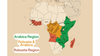
When Brazil's Arabica belt burned and Vietnam's Robusta harvests stuttered — when roasters were panicking, futures markets were spiking, and café owners were quietly rewriting their menus — Uganda exported 8.4 million bags of coffee in a single season. A continental record. A historic single month in September 2025 alone: 844,949 bags. The largest single-month export in Uganda's history. Ethiopia, meanwhile, hit an all-time production high of 11.6 million bags, shipping 7.8 million outward to a world that desperately needed them.
The global coffee market has now moved into what analysts are calling a more comfortable supply outlook — the first surplus after three consecutive deficit years. Prices are stabilising. Roasters are breathing again.
And Africa, which did the heavy lifting, is still largely being paid like a supplier rather than a partner.
We've been here before. We did the math on Uganda's $16-a-month reality. $2.5 billion in exports. 12.5 million people in the value chain. Roughly $16.67 per person, per month. The numbers haven't changed structurally. What has changed is Africa's leverage — and whether the continent uses it is the most important coffee story of this decade.
The Comfortable Supply Outlook Is a Window, Not a Guarantee
Here's the uncomfortable truth about being declared a "stabiliser" by the global market.
When prices were at crisis highs, African origins attracted attention because they were suddenly indispensable. Buyers came. Volume moved. Records were broken. Now that the surplus has arrived, now that Vietnam is recovering and Brazil is replanting, the global market has a habit of doing what it always does: it pivots back to its anchors and treats the origins that carried it through the crisis as interchangeable inputs again.
Africa cannot afford to let that happen this time.
The window created by 2024–2025's scarcity is still open. International buyers have had a genuine, commercial education in what African Robusta and specialty Arabica can deliver at scale. Uganda demonstrated that it could be a year-round, reliable, quality-diverse supplier. Ethiopia proved that strategic investment in replanting and farmer training produces results that compound. That credibility doesn't disappear with a surplus — but it does fade if it isn't converted into something structural.
The question is: what does structural actually look like?
Moving from the Menu to the Table: The Real Work
Being at the table, as we've written before, isn't a feeling. It's a set of decisions — made at the farm level, the national policy level, and yes, at the consumer level too.
Roast It Before You Ship It
Africa exports almost entirely in green. That single fact explains more of the $16-a-month problem than any other. The roasting margin, the branding margin, the retail margin — all of it flows to whoever holds the finished product. Uganda, Ethiopia, Rwanda, Zimbabwe — these countries have the climate, the beans, and increasingly the skill base to roast for export. The EU's EUDR compliance requirements, often framed as a burden on African producers, are actually an opportunity: buyers who need traceable, documented, deforestation-free supply chains are exactly the buyers who will pay more for a direct relationship with an origin roaster. African countries that get ahead of compliance don't just avoid a trade barrier — they position themselves as premium, transparent suppliers at a moment when the market is paying for exactly that.
Own the African Consumer
Ethiopia consumes nearly half of its own production domestically. That's not a failure to export — that's a country beginning to build a coffee culture on its own terms. Across the continent, a growing middle class, a younger generation of coffee drinkers, and an explosion of local cafés are creating an intra-African market that nobody in Zurich or London is accounting for in their futures models. Every bag of premium coffee sold in Nairobi, Kampala or Lagos at a fair price is a bag that didn't have to beg for margin from a European roaster. That market is early. It needs investment, infrastructure, and storytelling — but it is real and it is growing.
Build the Brand, Not Just the Bean
Ethiopian Yirgacheffe is one of the most recognised single-origin names in specialty coffee globally. But Ethiopia doesn't own the premium that name commands in Amsterdam or Brooklyn. Roasters do. Retailers do. The origin is the ingredient; the margin lives in the brand built around it. Africa needs more companies — more brands, more cooperatives with retail identities, more direct-to-consumer plays — that own the story from seed to cup. Not just as a ZiMM.coffee project or a handful of specialty pioneers, but as an industry posture. The scarcity years proved the beans are irreplaceable. The next step is making the brand equally irreplaceable.
Stop Negotiating Alone
One of the structural disadvantages African coffee producers carry is fragmentation. Individual smallholders negotiating with large international traders is not a fair contest. Cooperatives help. National coffee boards help. But what's needed now — particularly given the leverage of the current moment — is more coordinated pan-African positioning in the global market. The AFCA Conference coming to Uganda in 2027 is one piece of this. But the conversation needs to extend beyond conferences into actual pricing coalitions, shared quality standards that command premiums, and collective bargaining on trade terms. Africa grows around 14% of the world's exported coffee. That is not a small number. It is not being negotiated like it is.
The Surplus Doesn't Solve the Problem. It Tests Whether Africa Has Changed.
When the scarcity narrative dominated 2024 and 2025, there was a temptation to frame Africa's record exports as a vindication. Look how much we grew. Look how much we shipped. Look how the world needed us.
It was a vindication — of the farmers, the sector investment, the replanting programmes, the quality work being done at origin. None of that should be minimised.
But the $16 a month didn't change. The green export model didn't change. The margin structure didn't change. What changed was volume — and volume without value capture is just more work for less relative return.
Africa's transition from the menu to the table isn't going to be handed over by a grateful global market. The global market doesn't do gratitude. It does leverage. And for a brief, important window, Africa has more of it than it has had in a generation.
Now use it.
At ZiMM.coffee, we're building the model where Africa doesn't just supply the world's coffee — it owns a piece of the conversation. If that's a story you want to be part of, our subscriptions are where it starts.