For the first time, coffee cooperatives across five Ugandan districts have come together under one union. It's a small structural shift with a big implication — bargaining power doesn't get given. It gets built.
On June 17, 2026, something happened in Fort Portal that doesn't usually make international headlines, but should. Coffee cooperatives from five districts in Uganda's Toro region — Kyegegwa, Kyenjojo, Kamwenge, Kabarole, and Bunyangabu — came together to form the Toro Coffee Cooperative Union, the first of its kind in a region that has been growing world-class coffee for generations without ever having a unified body to represent it.
That gap is the story. Toro has always had the coffee. What it never had was the leverage.
Source: New Vision Uganda, June 19, 2026
✦ ✦ ✦
A Region That Grows Both, and Has Been Squeezed on Both
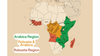
Toro is one of Uganda's most agriculturally distinct coffee regions — straddling the Rwenzori foothills, it produces both highland Arabica and lowland Robusta of genuine quality. That dual capacity should have made it a powerhouse. Instead, for decades, individual cooperatives in the region operated alone, and alone is exactly where extraction thrives.
The pattern will sound familiar to anyone who has followed this series: middlemen setting prices farmers couldn't contest. Commercial lenders charging interest rates that ate into already-thin margins. No storage infrastructure, which forces farmers to sell immediately after harvest — at the exact moment prices are lowest because everyone is selling at once. No shared access to certification programmes that could unlock premium markets. No value-addition capacity, meaning Toro shipped out raw potential and let someone else capture the margin on processing.
None of this was inevitable. It was the predictable result of fragmentation. A single smallholder has no negotiating position against a buyer with global market access. Five hundred smallholders organized under one union do.
What the Union Actually Changes
The Toro Coffee Cooperative Union isn't symbolic. It's structural. Headquartered in Kabarole with an interim steering committee already running, its stated purpose is to let member cooperatives pool resources, negotiate collectively on price, access affordable credit instead of predatory lending, pursue certifications as a bloc rather than individually, and begin building the value-addition infrastructure that the region has lacked entirely.
Each of those sounds modest on its own. Together, they're the difference between a region that supplies coffee and a region that has a stake in what that coffee is worth.
A single smallholder has no negotiating position against a global buyer. Five hundred smallholders under one union do.
The Number Nobody Was Pricing In
The most important line from the launch didn't come from a government official. It came from Davis Ikiriza, business development specialist at aBi Development, speaking about the women who have always been the backbone of Toro's coffee economy.
60–70%
of labour within the coffee value chain is contributed by women — yet most of it has gone unpaid and unrecognized, according to aBi's Davis Ikiriza.
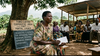
Sit with that number. The majority of the work that gets a cherry from tree to export bag has historically been done by women whose contribution was never formalized, never compensated on its own terms, never counted as labour in the way a buyer's spreadsheet counts labour. That's not a side detail in this story — it may be the central one.
The union's formation was driven in part by the EYE-C SHE Works Project, run by Integrated Seed and Sector Development Uganda with backing from aBi, the International Women's Coffee Alliance, and Café Africa Uganda. Their explicit goal: turn invisible labour into visible economic participation — leadership roles, market access, decent jobs, not just unpaid contribution to a household harvest that someone else sells.
Why This Belongs in This Series
Most of what we write about in On the Menu, Not at the Table is extraction — value leaving a region faster than recognition arrives. This is different. This is a region building the infrastructure to keep more of its own value, on its own terms, before the rest of the world even notices.
That matters because the global coffee market doesn't reward isolated quality. It rewards leverage. Ethiopia's reputation wasn't built on terroir alone — it was built on decades of origin-level organizing that eventually forced the specialty market to pay attention and pay properly. Toro is taking the first structural step in that same direction, decades later, against the same headwinds.
Uganda has a national target of 20 million bags of coffee by 2030. That target will be hit on the backs of regions like Toro — and the question this union is implicitly asking is whether the people doing the growing will share in what that growth is worth, or whether the gains will flow out the way they always have.
The world doesn't reward isolated quality. It rewards leverage. Toro just started building some.
What We'll Be Watching
A cooperative union is a structure, not a guarantee. What happens next determines whether this becomes a genuine shift in bargaining power or another well-intentioned framework that quietly underdelivers. We'll be watching whether the union secures real pricing leverage with international buyers — not just better terms with local middlemen. Whether the women doing 60–70% of the labour end up in the leadership roles the EYE-C SHE Works project is explicitly fighting for, not just the workforce. And whether value-addition — actual processing and export infrastructure inside Toro — materializes, rather than remaining aspirational language in a launch speech.
If it works, Toro becomes a template. Not because it solved everything, but because it proves the first move — organizing — is possible even in regions the global market has never bothered to learn the name of.
ZiMM.coffee is a pan-African specialty coffee subscription. We source, roast, and tell the stories that commodity trading erases. If you want to drink coffee that changes who gets paid, start here →