West Africa Threw This Coffee Away: The Stenophylla Story
Aug 28, 2026
On the Menu, Not at the Table
Stenophylla was abandoned a century ago because robusta yielded more. It turns out to be the only coffee we know of that tastes like arabica and crops nearly 7°C hotter — which is to say, it was built for the climate that's arriving.
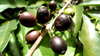
Coffea stenophylla is a species in its own right — not a variety of arabica, not a variety of robusta. It's native to Guinea, Sierra Leone and Ivory Coast, and it was carried into Ghana and Nigeria back when West Africa was still deciding what its coffee crop would be.
From the late 1800s to around 1920 it was exported as "Highland Coffee of Sierra Leone." The French paid well for it. Then robusta arrived, yielded far more per tree, and fed the instant coffee boom. Stenophylla was slow to mature and gave fewer flowers and fruit per node. Farmers made the rational choice and pulled it out.
By the 1990s Sierra Leone was exporting around 20,000 tonnes of robusta a year. Stenophylla was last collected in the wild there in 1954. For half a century, that was the end of it.
Then, in 2018, they found it again
A team including Daniel Sarmu, Aaron Davis of Kew, and Jeremy Haggar trekked toward the Liberian border and found a healthy wild population — around fifteen plants, in a forest that is itself disappearing.
They got beans. In 2020 and 2021 they put those beans in front of professional sensory panels. Fifteen judges, blind, three roast profiles, 225 cups. Nobody was told what they were tasting.
Then they asked the judges a simple question.
Blind sensory panel · CIRAD protocol · 15 judges
"Is this an Arabica coffee?"
Arabica, Ethiopia (high quality)98%
Stenophylla, wild-collected, Sierra Leone81%
Arabica, Brazil (medium quality)44%
Robusta, Indonesia (high quality)7%
A different species, from the opposite side of the continent, read as arabica to four judges in five — and read as arabica more convincingly than a real arabica from Brazil. Asked the reverse question, only 2% called it robusta-like. Nearly half said it was simply something new.
Now the part that matters
A separate panel scored the Sierra Leone sample 80.25 on the SCA scale. Eighty is the specialty threshold. That coffee came from wild plants, selected at random, with no domestication, no selection for good beans, crude processing, from a sample of about ten grams.
Ten grams. Off a wild bush. And it scored specialty.
The tasting notes the panels recorded read like a good Rwandan lot: peach and stone fruit, blackcurrant, mandarin, honey, light black tea, jasmine, chocolate, caramel, nuts, elderflower. Natural sweetness. Medium-high acidity. Good body.
And it does all of that at a mean annual temperature 6.8°C above arabica's.
That number is the whole story. Arabica sits around 18.7°C mean annual temperature. Stenophylla crops at 24.9°C — hotter than robusta, hotter than liberica — and does it on comparable rainfall. It grows at roughly 400 metres. Low, hot, wet: exactly where arabica cannot go and where a great deal of West Africa already is.
Until this, the trade-off was assumed to be iron-clad. You could have heat tolerance or you could have cup quality. Robusta and liberica were the heat answer and both are shut out of the specialty market. Stenophylla is the first species anyone has found that breaks the trade.
What makes it stranger still: stenophylla is not a close relative of arabica. The two grow on opposite sides of Africa, separated by at least 4,000 kilometres, with different environmental needs and different bean chemistry. The flavour similarity is, in the researchers' own framing, surprising and remarkable. It just happens to taste that way.
So why does this land on our blog
Because the pattern is one we keep writing about.
West Africa had a coffee that Paris and London paid a premium for. It was set aside for a lower-quality species that produced more volume for the instant market. The decision was made on yield, on a global price signal, and on what buyers abroad wanted — and the farmers who made it were being entirely sensible given the information and the prices in front of them.
A hundred years later, the crop that was discarded turns out to be the one adapted to the temperatures now arriving. Ghana and Nigeria took stenophylla in during that early period. Guinea, Sierra Leone and Ivory Coast are its home. Africa has been holding the answer to coffee's climate problem the entire time, in forests that are being cut down.
Where it stands right now
Stenophylla is on the IUCN Red List as threatened, and the forests it survives in are still going. Yield remains the open question — the reason it lost the first time hasn't been solved, only re-examined.
The rebuild is real but small. A community nursery in Sierra Leone, thousands of seedlings, trial plantings measured in three or four hectares, backed by Kew, CIRAD, the University of Greenwich, Welthungerhilfe and the Swiss trader Sucafina. Nobody knows exactly how long the trees take to bear — estimates run from two to seven years, with three to four most likely.
Which means there is, as of now, essentially no commercial stenophylla to buy. Not scarce. Not expensive. Not yet existing.
We roast African coffee for a living, so we'll say the obvious: the day a stenophylla lot is available, we want it.
But the more useful thought is the one underneath. Coffee's climate answer wasn't found in a laboratory or a breeding programme. It was found by a Sierra Leonean development specialist and two researchers walking into a forest to look for something everyone had written off.
There are around 130 Coffea species. Two of them feed the world. Nobody has seriously looked at most of the rest — and almost all of them are African.
In the meantime
A new African origin every month, roasted in small batches in Switzerland. Cancel anytime.
Start your subscriptionComments 0
Be the first to leave a comment.