The Ground Beneath the Cup
Across Africa's coffee belt — from Uganda's Masaka region to Rwanda's Dukunde Kawa Musasa — smallholder growers are using regenerative agriculture to outlast droughts, rebuild exhausted soil, and produce better coffee than the industry thought possible here. The technique is old. The decision to finally invest in it is new.
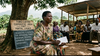
Nakalisa Mary Fatuma didn't need a paper on climate science to know what was happening to her farm. She could see it. The rains came later, or not at all, or arrived in a single violent burst that washed the topsoil off her slopes before her coffee roots could hold it. Like most smallholders in the African coffee belt, she had built her livelihood on a crop that the climate was slowly making unreliable.
Then she changed how she grew it. And the farm changed back.
"Since we applied mulches and planted drought-resistant seedlings, the coffee farms are reliably resilient," Fatuma told the IUCN this year. "My coffee is stronger and more promising, and so is my family."
That sentence — stronger and more promising — contains a whole argument about what regenerative agriculture actually does, and why it matters not just agronomically, but economically, for the regions we source from.
✦ ✦ ✦
What's Actually Happening Across the Belt
Across central and east Africa, coffee-growing regions have long supplied volume into the global chain — but volume coffee is a brutal business model for a smallholder: you're competing on quantity you can't scale, at prices you can't set, in a market that doesn't reward the name of where the coffee came from.
The soil problem makes it worse. Tropical coffee soils under conventional farming deplete fast. Heavy rainfall causes erosion. Without organic matter to hold moisture, dry spells hit harder. Yields become unpredictable — the worst possible condition for a farmer who has no insurance, no savings buffer, and no income source outside that harvest.
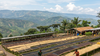
The pilot programs that farmers like Fatuma joined were coalition-built responses to exactly this. In Uganda, the Global Environment Facility brought together exporters, Nespresso, and the IUCN to establish 30 demonstration farms in Masaka. In Rwanda, cooperatives like Dukunde Kawa Musasa have been integrating shade trees and soil-health practices into their Arabica farms with measurable results. In both cases, farmers could learn hands-on — not through a handbook — what regenerative techniques actually look like at field scale.
Volume coffee is a brutal model for a smallholder. You're competing on quantity you can't scale, at prices you can't set, in a market that doesn't know your name.
What Regenerative Actually Means
The term gets thrown around loosely, so it's worth being specific about what regenerative growers are actually doing — and why it's different from simply going organic.
Mulching
Organic material laid around plant bases retains soil moisture, regulates temperature, and feeds microbes — the invisible engine of soil fertility. It also suppresses weeds without chemicals.
Cover Cropping
Complementary plants grown between coffee rows replace nitrogen, reduce erosion, and shield soil microbes from direct sun. The coffee grows slower. It also grows better.
Shade Trees
Trees planted throughout the acreage drop leaves that continuously feed the soil. They also lower ambient temperature — which slows cherry development and concentrates the sugars that become flavor in the cup.
No-Till
Soil is never turned. This protects the fungal networks and microbial communities underneath that make nutrients bioavailable to plant roots — networks that tillage can destroy in a single season.
The logic, taken together, is this: stop treating the soil as a medium to grow plants in, and start treating it as a living system that needs to grow too. When the soil thrives, the plant thrives. When the plant thrives, the farmer isn't one bad rainy season away from losing everything.
"We used to think erosion was just something we had to live with. But when we saw how the soil stayed in place on the demo plot, everyone wanted to try."— Munanira Joseph, Masaka smallholder farmer
What This Means for Flavor — and Price
Let's be specific about what's in this for the cup. Shade-grown, slow-ripened coffee from well-maintained soil is not the same commodity product as sun-blasted, fast-farmed coffee pushed for volume. The former has more lipids, more complex sugars, more nuance. It's the difference between a coffee you blend out of sight and one you can put on a bag and talk about.
That matters commercially because specialty pricing doesn't follow commodity pricing. The reason African coffee has historically sold cheap is not purely the market's fault — it's partly that commodity-farmed coffee from depleted soil genuinely is a commodity by-product. Regenerative farming changes the underlying asset. Better soil grows better coffee, and better coffee unlocks better pricing — which funds more investment in the farm, which grows better soil. The flywheel only starts spinning when someone shows farmers the first turn of the wheel.
Why We're Writing About This
Most of what this series covers is structural injustice: the ways pricing, history, and market access have kept African farmers from capturing the value their coffee creates. This story is different. It's about what becomes possible when farmers get access to the right knowledge and the right support — and what the ground itself can do when you stop extracting from it and start investing in it.
We think about this when we source. The farms we want to build long relationships with are farms that will still be productive in twenty years — farms where the soil is getting better each season, not slowly dying. Regenerative agriculture isn't a premium marketing claim. It's the difference between a supply chain with a future and one that's quietly consuming its own foundation.
Africa's farmers are building that future for themselves. The least the rest of the chain can do is price it like it matters.
Regenerative agriculture isn't a marketing claim. It's the difference between a supply chain with a future and one that's quietly consuming its own foundation.
ZiMM.coffee is a pan-African specialty coffee subscription. We source, roast, and tell the stories that commodity trading erases. If you want to drink coffee that changes who gets paid — and how the land is farmed — start here →